The Anatomy of Public Corruption

Pete Bennett, Michael Milken, Larry Ellison and Philip Anschutz

This was borrowed from Milken Institute where they're talking older homeless.

My blog about homeless stalled during Covid was created as clearing house for homeless solutions and services.  A striking connection to why i am homeless is police corruption and attacks on my legal cases leads to destitution and despair despair.

Try bayareahomeless.com

 my name is Pete Bennett I was once involved in litigation involving partners of Milken attorneys near manatt Phelps and Wilson sonsini somehow I ended up homeless thankfully Bono didn't pay his bills either


Cities Must do More to Protect Older Homeless Americans From COVID-19
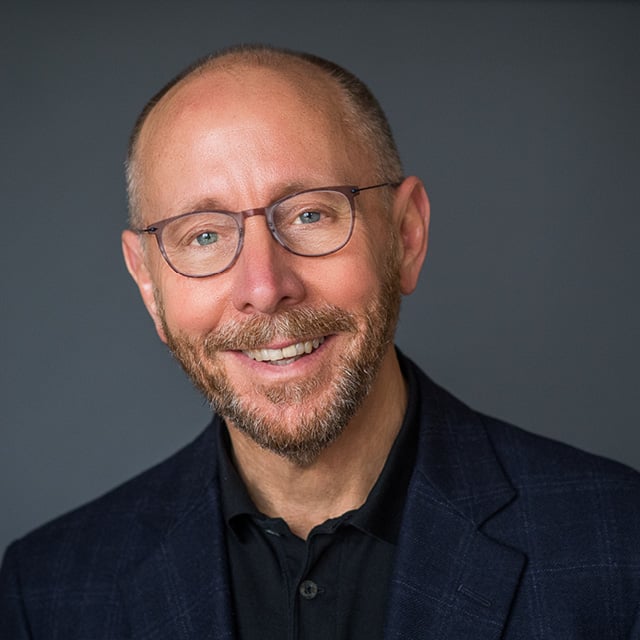
Paul Irving
Paul Irving
Chairman, Milken Institute Center for the Future of Aging
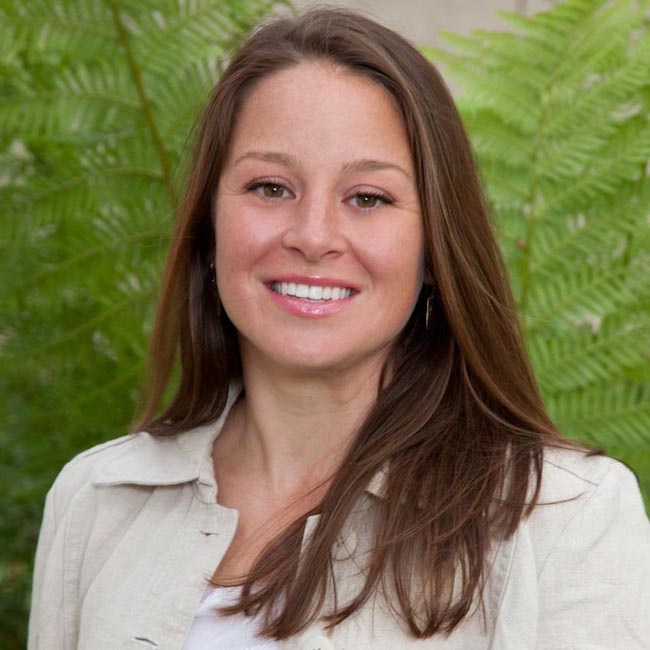
Lauren Dunning
Lauren Dunning
Director, Center for the Future of Aging

The moral test of any society is how it treats its most vulnerable members, including those who are old and living in the shadows.

NOT SINCE THE 1918 Spanish flu have we faced such drastic nationwide measures to prevent the spread of a deadly disease pandemic. Communities across America are shut down and individuals are instructed to stay at home and distance from those outside their households. For older adults, who are at greater risk, particularly those with chronic conditions, physical isolation means protection. It can be a matter of life and death.
But what happens when that protection is out of reach?
This is the reality for older Americans who are homeless. Without privacy, access to soap, hand sanitizer, and other tools for hygiene, and the ability to safely store food and other necessities, the dangers of daily survival are daunting. Many public restrooms are now closed. Food banks and other charitable services are strained. Testing and care may be inaccessible and the prospect of rapid disease spread is high.
More people than ever are homeless in their "golden years." More than 10,000 Americans turn 65 each day, and an increasing number of them are aging on the streets. People age 50 and over now comprise approximately one-third of homeless Americans. With higher rates of age-related disease and an increased mortality rate, this group already lacks access to quality care and suffers from disparities and negative biases in the medical ecosystem. In Los Angeles, where the number of homeless older adults aged 62 and over grew by more than 20% in 2018, the homeless die 22 years earlier than the general population.
To be sure, efforts to scale up the response are progressing. Shelters will be supported by the federal stimulus package with up to $4 billion in new resources that can be used to modify operations to prevent the spread of the virus in close quarters. Community spaces are being repurposed. Los Angeles is adding 6,000 shelter beds at city-owned recreation centers. Seattle, an early hot spot for the virus, has deployed an event space and a number of community centers to ease crowded conditions. Several communities are working with the hospitality sector to secure housing. In San Francisco, more than 8,000 rooms have been offered by hotels and motels in response to a call to help homeless residents, health care workers and first responders in need of safe places.
Cities are allocating additional resources and revising policies to prevent the spread of the virus. San Jose, California, is providing hand sanitizer and masks at homeless encampments, while Los Angeles has temporarily halted encampment cleanups to avoid disruption of tents and belongings. Austin has installed portable bathrooms and hand-washing facilities in at least 20 locations citywide.
All of these strategies and more are needed to stem the devastating risks of the virus for homeless older adults. A new academic study predicts more than 21,000 hospitalizations and 3,400 deaths of homeless adults if swift action is not taken.
It is not just the current population of homeless older adults who are at risk. Many older Americans are on the edge, rent-burdened and on the precipice of homelessness. The Harvard Joint Center for Housing Studies found that in 2019 in California, 35% of renters ages 65 to 79, and 42% of renters 80 or older, were rent-burdened, meaning that more than half of their incomes went to housing. The job losses and economic strains resulting from the coronavirus crisis are placing many more at risk of losing their homes.
Cities are responding by imposing moratoriums on evictions, including Los Angeles and Miami. Others are providing rental assistance, such as Chicago, which launched the COVID-19 Housing Assistance Grant program to provide 2,000 grants to assist residents impacted by the pandemic. Advocates are calling for further measures, including forgiveness of missed rent payments to prevent loss of housing once the immediate threat has subsided and policies are rolled back.
Taken together, these interventions add up. But much more must be done.
The moral test of any society is how it treats its most vulnerable members, including those who are old and living in the shadows. The coronavirus crisis is a moment of emergency that will measure our own morality. As neighbors and citizens, we must voice our support for homeless older adults and for those at risk of becoming homeless. Lives are at stake, and our leaders, communities, philanthropic organizations and all levels of government must work together now to provide resources and solutions to meet the immediate need.
This article was originally published in U.S. News on April 9, 2020 
Published April 21, 2020

Share:

ContrA Costa Superior Court Pro Tem Judges - Let the litigants know

The Pro Tem Judge or Hearing Officials 

What you don't know will hurt you and everyone


Temporary Judge Program

A "court-appointed temporary judge" is an attorney who has satisfied the requirements for appointment listed in California Rules of Court 2.812, and has been appointed by the court to serve as a temporary judge in a courtroom.


Parties might encounter a temporary judge if:

  • The court has appointed a temporary judge to hear their case on the date they have their court appearance.
  • Parties have decided they want to have a temporary judge hear just their case (NOTE: This is a local court program, and it is only available in limited and unlimited jurisdiction civil cases.)


Joining Contra Costa's Temporary Judge Panel

Effective January 1, 2007, California Rules of Court, Rule 2.810 established new and more rigorous training and qualification requirements for attorneys wishing to serve as temporary judges.

To qualify, attorneys must have been active members of the California State Bar, in good standing, for at least 10 years before appointment. There cannot be any pending disciplinary actions, and the individual must not have pled guilty or no contest to a felony, or have a felony conviction that has not been reversed. He or she must satisfy all education and training requirements established by the state, as well as any other conditions that the individual court may require. Mandated training elements include a 3-hour in-person course on judicial demeanor (provided by a court) together with an online training course in related judicial demeanor and ethical issues.

Attorneys must also take one or more online training courses provided by the Administrative Office of the Courts, depending on the substantive areas of law they wish to hear.

Depending on case type, there may also be additional training, education, or experience requirements to serve in Contra Costa County.


Minimum Requirements

The presiding judge may not appoint an attorney to serve as a temporary judge unless the attorney has been admitted to practice as a member of the State Bar of California for at least 10 years before the appointment and meets the following conditions:

  • Is an active member in good standing of the State Bar and has no disciplinary action pending;
  • Has not pled guilty or no contest to a felony, or has not been convicted of a felony that has not been reversed;
  • Has satisfied the education and training requirements;
  • Has satisfied all other general conditions that the court may establish for appointment of an attorney as a temporary judge in that court; and
  • Has satisfied any additional conditions that the court may require for an attorney to be appointed as a temporary judge for a particular assignment or type of case in that court.
NOTE: Consistent with CRC Rule 2.818, temporary judges have an ongoing duty to report any disciplinary action pending or taken against them by the State Bar of California at least 2 court days before arriving to serve as a temporary judge.


Temporary Judges will need to take ALL required trainings and attend a court session on each case type(s) per the location in which they wish to sit.

Martinez
(morning)
Martinez
(afternoon)
Pittsburg
(morning)
Richmond
(afternoon)
Walnut Creek
(morning)
Judicial Demeanor
Ethics
Probate
Judicial Demeanor
Ethics
Civil Harassment
Small Claims
Unlawful Detainer
Online Classes
Judicial Demeanor
Ethics
Small Claims
Traffic
Unlawful Detainer
Online Classes
Judicial Demeanor
Ethics
Small Claims
Traffic
Unlawful Detainer
Online Classes
Judicial Demeanor
Ethics
Traffic Only
Online Classes

Training Requirements

These are requirements that everyone must meet every two years:

  • Review the online Fairness, Demeanor, and Self-Represented litigants materials
  • Attend a 3-hour in-person training session on judicial demeanor
  • Take the online course on judicial ethics
  • Take local and online classes as required for the case type(s)
  • Attend a court session on each case type for the location above
Training Schedule
ClassDateTime
Judicial Demeanor*Thursday, January 9th, 20205:30 - 8:45 PM
Unlawful Detainer*Thursday, January 16th, 20205:30 - 8:45 PM
Small Claims*Wednesday, January 22nd, 20205:30 - 8:45 PM
Civil Harassment*Thursday, January 30th, 20205:30 - 8:45 PM
Traffic*Thursday, February 6th, 20205:30 - 8:45 PM
* 3 MCLE Credits
To sign-up for any of the local training classes, please email the Temporary Judge Program at: tempjudge@contracosta.courts.ca.gov

Application

Please complete the application for the Temporary Judge Program.


Extra Requirements by Calendar Type

Small Claims Calendars

  • Take all relevant online training courses and review online benchguides
  • Attend the local in-person class on hearing small claims calendars

Traffic Calendars
  • Take online training course and review online benchguides
  • Attend the local in-person class on hearing traffic calendars

Unlawful Detainer Calendars
  • Take online training course and review online benchguides
  • Attend the local in-person class on hearing unlawful detainer calendars

Probate Calendars
  • Attend the local in-person class on hearing probate calendars

Civil Harassment Calendars
  • Attend the local in-person class on hearing civil harassment calendars

On-Line Training Can Be Found Here


Share:

Anchor links for post titles

Popular Posts

Blog Archive

Labels

Recent Posts

Popular Posts

Labels

Recent Posts

Pages

Labels

Blog Archive

Recent Posts